
Ranking your website without backlinks is no longer a distant dream in 2026. Search engines have evolved significantly, prioritizing content quality, user experience, and topical depth over traditional link-building tactics. Newer sites and solo creators are consistently achieving top positions by mastering on-page, technical, and behavioral signals.
Whether you run a niche blog, service-based business, or startup website, these strategies focus on what you control directly: your content, site structure, and visitor satisfaction. Let’s dive into the proven playbook that works in today’s algorithm.
The Shift in Search Engine Rankings
Something transformative happened in search algorithms over recent years. Established domains with massive backlink profiles are increasingly being challenged by fresh websites that focus purely on value delivery.
Ranking your website without backlinks succeeds today because Google and other engines reduced reliance on easily manipulated link signals. Instead, they emphasize behavioral metrics (dwell time, scroll depth, bounce rates), content comprehensiveness, page experience, and demonstrated expertise.
This shift rewards creators who truly understand their audience. No more generic outreach campaigns or risky link schemes just smart, sustainable SEO practices that deliver real results month after month.
Tactic One: Establish Topical Authority Through Cluster Publishing
Topical authority remains one of the strongest ranking factors when building ranking your website without backlinks. Search engines view sites that deeply cover a subject as reliable authorities.
A content cluster consists of:
- Pillar Page: A comprehensive guide targeting the main broad keyword. This acts as the central hub with 3,000+ words of in-depth information.
- Cluster Articles: 8–20 supporting pieces that drill into specific subtopics. Each targets related long-tail keywords.
- Strategic Internal Linking: Connect everything naturally. Cluster pages link back to the pillar, the pillar links to clusters, and related articles interlink.
Example in Practice: For a fitness blog, the pillar could be “Complete Guide to Home Workouts in 2026.” Cluster articles might cover “Best Bodyweight Exercises for Beginners,” “Nutrition Tips for Muscle Recovery,” and “10-Minute HIIT Routines Without Equipment.”
Publish consistently over 60–90 days. This interconnected structure signals expertise, improves crawl efficiency, and lifts rankings across the entire cluster. Track progress with Google Search Console to see impressions grow.
Tactic Two: Treat On-Page Optimization as a Science, Not a Checklist
On-page elements still move the needle dramatically in 2026. Avoid keyword stuffing and focus on user-first optimization.
Key Elements That Matter Most:
- Title Tags: Place the primary keyword naturally within the first 55–60 characters. Combine it with a benefit-driven hook, e.g., “Ranking Your Website Without Backlinks in 2026: Proven Strategies.”
- Meta Descriptions: Write compelling 150–160 character summaries that encourage clicks. Strong CTR improves behavioral signals.
- Heading Structure: Use one H1, logical H2s for major sections, and H3s for details. Make headings question-based or benefit-oriented.
- Semantic Keywords: Naturally incorporate LSI terms, synonyms, and related phrases to demonstrate topic coverage.
- Structured Data: Add Schema.org markup (Article, FAQPage, HowTo) to enable rich results.
Audit existing pages thoroughly. Ask: Does this fully satisfy the query? Is it scannable? Update older content before creating new material.
Tactic Three: Decode What the Searcher Actually Wants
Misunderstanding search intent is a top reason pages fail to rank. Google excels at matching content format to user needs.
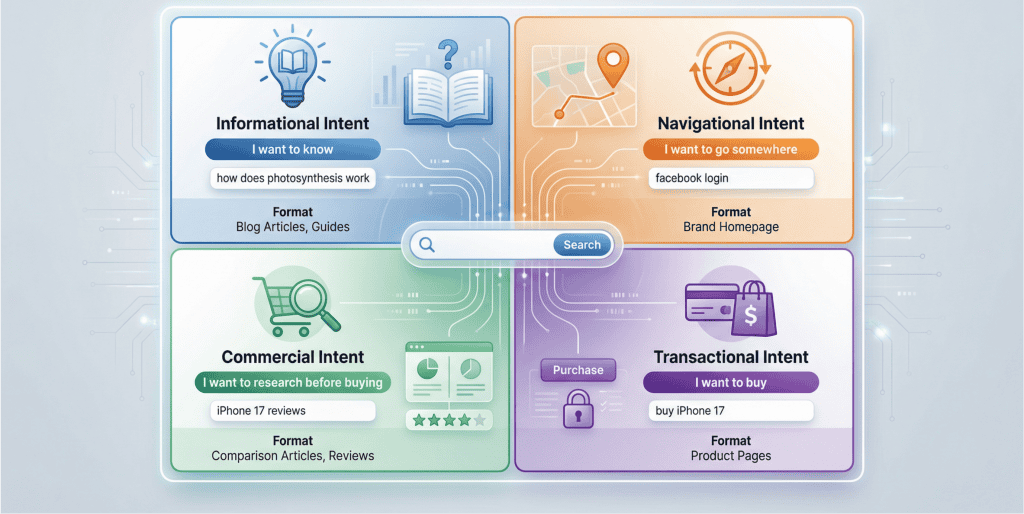
Four Main Intent Types:
- Informational — Users seek knowledge. Use in-depth guides, explanations, and tutorials.
- Navigational — Users look for a specific site. Usually not worth targeting unless you own the brand.
- Commercial Investigation — Users compare options. Comparison tables, pros/cons lists, and reviews win here.
- Transactional — Users are ready to buy or act. Clear CTAs and frictionless landing pages perform best.
Pro Tip: Search your target keyword in incognito mode. Analyze the top 5–10 results for format, length, media usage, and questions answered. Then create superior content that exceeds expectations.
Tactic Four: Go After Long-Tail Keywords Your Competitors Ignore
Broad keywords are highly competitive and difficult without authority. Long-tail phrases offer faster wins for ranking your website without backlinks.
Why Long-Tail Keywords Excel:
- Lower competition
- Higher conversion rates due to specific intent
- Cumulative traffic from dozens of targeted pieces often outperforms one competitive term
Examples:
- Instead of “SEO tips” → Target “how to improve local SEO for small businesses in 2026 without paid ads”
- Use tools like Google Autocomplete, AnswerThePublic, or Search Console data to discover opportunities.
Build clusters around these phrases. As topical authority grows, broader keywords naturally improve.
Tactic Five: Make Technical Performance a Non-Negotiable Standard
Even the best content struggles if technical issues exist. Core Web Vitals directly influence rankings and user satisfaction.
The Three Critical Vitals:
- Largest Contentful Paint (LCP): Aim for under 2.5 seconds. Optimize images (WebP format, compression), leverage CDNs, and minimize render-blocking resources.
- Interaction to Next Paint (INP): Keep under 200ms. Defer non-essential JavaScript and optimize scripts.
- Cumulative Layout Shift (CLS): Target under 0.1. Set explicit dimensions for images and ads.
Regularly test pages with Google PageSpeed Insights and Lighthouse. Fix issues promptly to gain better crawl budget and user retention.
Tactic Six: Engineer the User Experience to Signal Quality
Behavioral signals are powerful ranking factors. Visitors who engage deeply tell Google your page delivers value.
UX Elements That Boost Signals:
- Strong opening paragraphs that deliver immediate value within the first 100 words.
- Short paragraphs, bullet points, and subheadings for scannability.
- Interactive elements like checklists, calculators, tables, and expandable sections.
- Clear internal navigation and related content recommendations at the end of articles.
Reduce friction, improve readability, and guide users toward deeper exploration of your site.
Tactic Seven: Build E-E-A-T Into the Structure of Your Site
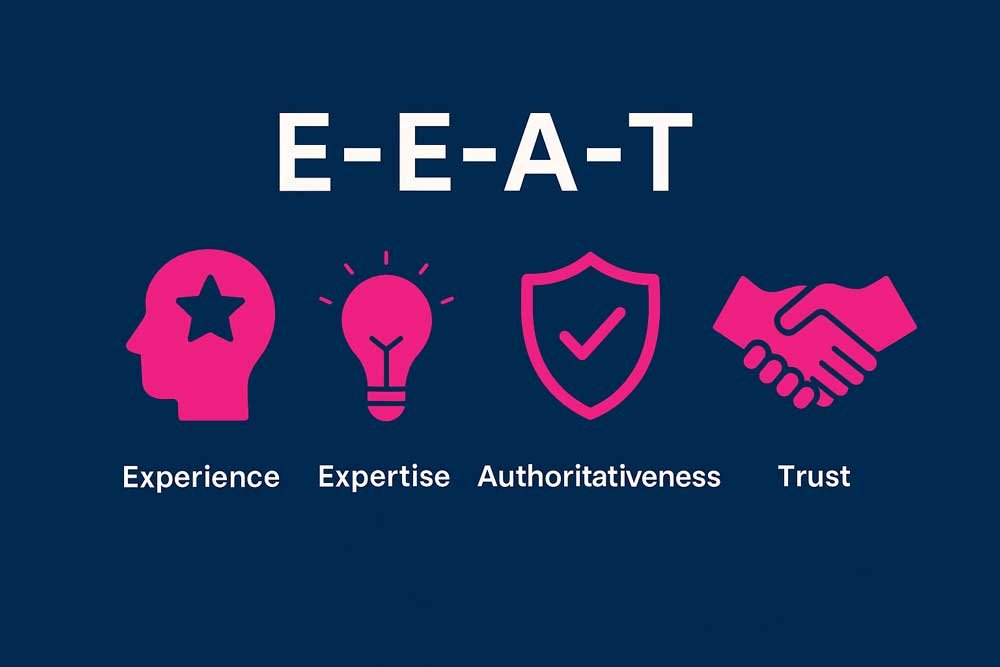
E-E-A-T (Experience, Expertise, Authoritativeness, Trustworthiness) is central to Google’s quality guidelines.
Actionable Ways to Strengthen E-E-A-T:
- Detailed author bios showcasing real credentials and experience.
- Transparent “About Us” page with genuine stories and team information.
- Outbound links to reputable sources for claims.
- Updated content with “Last Reviewed” dates.
- Proper contact information, privacy policy, and HTTPS.
These elements build trust with both users and algorithms.
Tactic Eight: Position Your Content for Featured Snippets and Zero-Click Visibility
Featured snippets and People Also Ask boxes offer prime visibility without needing the #1 organic spot.
Optimization Tactics:
- Answer questions directly under question-style headings (40–60 words).
- Use numbered and bulleted lists for processes.
- Include dedicated FAQ sections.
- Create concise definitions and comparison tables.
This formatting increases chances of being selected for rich results, driving traffic even on zero-click searches.
Closing Thoughts: What Ranking Without Links Actually Demands
Ranking your website without backlinks in 2026 requires consistency, audience focus, and technical excellence. Choose a niche, build deep content clusters, optimize relentlessly, and prioritize real user value. These fundamentals outperform outdated link-chasing strategies for many sites.
Success comes from editorial discipline and genuine helpfulness. Start small with one strong cluster and scale methodically.
For expert guidance on implementing these strategies or auditing your site, visit helpmeinseo.com your partner for sustainable SEO growth in 2026 and beyond.
FAQs: Ranking Your Website Without Backlinks in 2026
- Can a website rank on Google without backlinks in 2026?
Yes. In 2026, websites can rank without backlinks if they have strong topical authority, excellent on-page SEO, high-quality content, and good user experience. Search engines now rely more on content relevance, search intent, and site performance. - Why are backlinks becoming less important for SEO?
Backlinks are still useful, but modern search algorithms focus more on user behavior signals, topical authority, and content quality. This means websites can rank well by creating helpful content and optimizing technical SEO. - What is topical authority in SEO?
Topical authority means covering a subject in depth through multiple related articles. When a website publishes comprehensive content clusters around a topic, search engines consider it a trusted source. - What is a content cluster strategy?
A content cluster strategy involves creating a pillar page that covers a broad topic and multiple supporting articles that explore subtopics. These pages are interlinked to improve SEO and topical authority. - How does search intent affect SEO rankings?
If your content matches the user’s intent (informational, transactional, or navigational), it has a higher chance of ranking in search results. - Are long-tail keywords important for ranking without backlinks?
Yes. Long-tail keywords are less competitive and highly specific. Targeting them allows smaller websites to rank faster without relying on backlinks. - What are the most important on-page SEO factors in 2026?
Key on-page factors include optimized title tags, clear headings, semantic keywords, internal linking, structured data, and well-written content that directly answers user queries. - What technical SEO factors matter most today?
Important technical SEO factors include fast page speed, mobile-friendly design, clean website architecture, proper indexing, and secure HTTPS connections. - What are the Core Web Vitals that impact rankings?
The three most important Core Web Vitals are: Largest Contentful Paint (LCP) – loading speed, Interaction to Next Paint (INP) – responsiveness, Cumulative Layout Shift (CLS) – visual stability. - How does user experience influence SEO rankings?
Search engines track engagement signals like bounce rate, time on page, and click-through rate. A better user experience can improve these signals and boost rankings. - What does E-E-A-T mean in SEO?
E-E-A-T stands for Experience, Expertise, Authoritativeness, and Trustworthiness. These are key factors in optimizing a website’s ranking. Content that demonstrates these qualities tends to perform better. - Can small websites compete with large brands in SEO?
Yes. By targeting niche topics, long-tail keywords, and providing high-quality content, small websites can compete with large brands even without strong backlink profiles.