
In today’s competitive digital landscape, learning how to start a print-on-demand t-shirt business represents one of the most accessible and scalable opportunities for aspiring entrepreneurs. At HelpMeInSEO.com, we specialize in helping creators and business owners build sustainable online ventures.
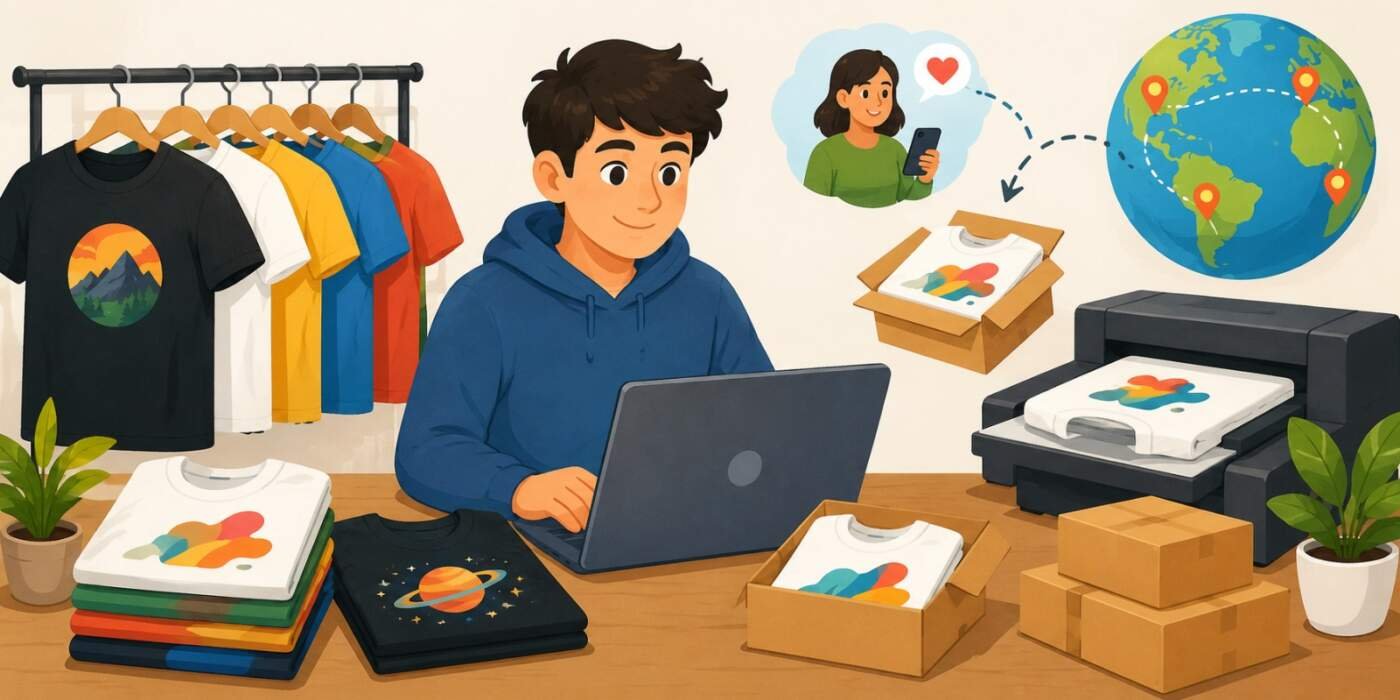
Print-on-demand (POD) eliminates traditional barriers like inventory management and upfront manufacturing costs. You design creative graphics, upload them to an online store, and a fulfillment partner handles printing and shipping only when customers place orders. This model has gained tremendous traction, especially with AI tools streamlining design, marketing, and operations.
Understanding Print-on-Demand and Its Business Model
Print-on-demand is an e-commerce fulfillment method where products are produced after an order is received. For a t-shirt business, this means no need for storage space, bulk purchases, or handling logistics yourself. Suppliers integrate directly with platforms like Shopify or Etsy, automatically processing orders.
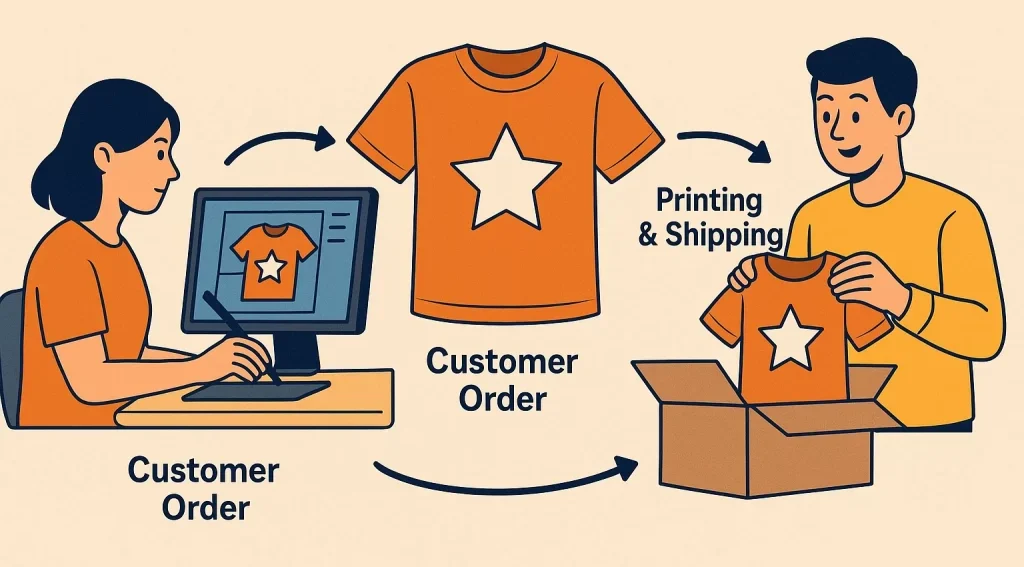
The process works as follows:
- You create or generate designs.
- Upload designs to product templates in your store.
- Customers browse and purchase.
- The POD provider prints the design on a t-shirt and ships it directly to the buyer.
- You earn the difference between your selling price and the base cost plus fees.
This approach minimizes financial risk, making it ideal for beginners exploring how to start a print-on-demand t-shirt business without significant capital. In 2026, advancements in AI further enhance customization options, allowing for rapid iteration based on market trends.
Why 2026 Is an Ideal Time to Launch Your Print-on-Demand T-Shirt Business
Market conditions strongly favor new entrants in custom apparel. Industry projections indicate the global custom t-shirt and personalized apparel sector will continue expanding rapidly through 2027 and beyond. Consumer demand for unique, personalized items remains high among Gen Z and Millennials, who value self-expression through fashion.
AI integration has reduced startup barriers dramatically. Tools now assist with everything from trend identification to customer engagement. This creates opportunities for solo entrepreneurs to compete effectively with established brands. Starting now positions you to capitalize on growing interest in sustainable, on-demand production that reduces waste compared to traditional manufacturing.
At HelpMeInSEO.com, we regularly advise clients that combining creative vision with data-driven AI strategies yields the best results when building a print-on-demand t-shirt business.
The Role of AI in Modern Print-on-Demand Success
Artificial intelligence has transformed how to start a print-on-demand t-shirt business by automating repetitive tasks and enhancing decision-making. Here are key areas where AI provides significant advantages:
Niche Research: AI analyzes search data, social trends, and competitor performance to identify profitable opportunities. Instead of guesswork, you receive data-backed recommendations for underserved audiences.
Design Generation: Advanced image generation tools create professional-quality artwork from text descriptions. This democratizes design, allowing non-artists to produce compelling visuals quickly.
Content Creation: AI helps craft SEO-optimized product descriptions, blog posts, and advertising copy that rank well in search engines.
Marketing Automation: From generating ad creatives to personalizing email campaigns, AI handles scaling outreach without requiring a large team.
Analytics and Optimization: Machine learning tools interpret sales data and customer behavior to refine strategies continuously.
By incorporating these capabilities, your business can operate more efficiently, focusing human effort on strategy and creativity.
Step-by-Step Guide: How to Start a Print-on-Demand T-Shirt Business
Step 1: Research and Validate a Profitable Niche
Successful print-on-demand t-shirt businesses begin with thorough niche selection. Broad categories like “t-shirts” face heavy competition. Instead, target specific interests, hobbies, professions, or communities.
Effective research methods include:
- Analyzing top-selling items on marketplaces.
- Using trend monitoring tools to identify rising search volumes.
- Consulting AI assistants for micro-niche suggestions tailored to current cultural moments.
Promising areas in 2026 include wellness and mental health themes, fitness and lifestyle motivation, pop culture references (handled carefully to avoid infringement), eco-conscious messaging, and personalized family or pet designs. Choose a niche that aligns with your interests to maintain long-term motivation and authenticity in your marketing.
Step 2: Develop a Strong Brand Identity
Your brand tells a story that connects with customers emotionally. Define your target audience clearly, then craft a name, visual style, and messaging that resonates.
Consider elements like:
- Brand name that is memorable and available as a domain.
- Consistent color palette and design aesthetic.
- Value proposition that differentiates your offerings.
Tools powered by AI can generate logo concepts, color schemes, and brand narratives efficiently. Focus on building recognition through consistent application across your store, social channels, and product packaging inserts.
Step 3: Create High-Quality Designs
Design creation no longer requires advanced software skills. Modern AI platforms generate print-ready files based on detailed prompts. Aim for clean, scalable artwork suitable for apparel printing.
Best practices include:
- Working at high resolution (minimum 300 DPI).
- Using transparent backgrounds for flexibility.
- Ensuring designs translate well across different garment colors.
- Testing mockups to evaluate final appearance.
Experiment with various styles vintage, minimalist, illustrative, or typographic while maintaining originality. Always prioritize commercial-use rights and avoid protected intellectual property.
Step 4: Select Reliable POD Partners and Platforms
Your choice of fulfillment provider impacts quality, shipping times, and profit margins. Popular options offer different strengths:
- Providers with multiple printer networks for better pricing and availability.
- Services emphasizing premium materials and global fulfillment centers.
- Platforms supporting additional product lines for future expansion.
Many entrepreneurs combine Shopify for their main storefront with integrated POD applications. This setup offers customization, analytics, and scalability advantages. Etsy serves well for initial testing due to built-in traffic.
Step 5: Build and Optimize Your Online Store
A professional storefront significantly influences conversion rates. Prioritize fast loading times, mobile responsiveness, and intuitive navigation.
Key setup elements:
- Select a clean, modern theme.
- Integrate your chosen POD service.
- Create detailed product pages with multiple mockup views.
- Implement secure payment options popular in your target markets.
- Optimize for search engines with strategic keyword placement.
For SEO, incorporate relevant terms naturally into titles, descriptions, and headings. High-quality images and clear sizing information build customer trust.
Step 6: Establish Pricing and Financial Projections
Profitability depends on balancing competitive pricing with healthy margins. Calculate costs including base product price, platform fees, shipping, and marketing expenses.
A typical approach involves:
- Setting prices 2-2.5 times the base cost initially.
- Monitoring competitor pricing in your niche.
- Offering bundles or upsells to increase average order value.
- Adjusting based on performance data.
Aim for margins that cover advertising while providing sustainable returns. Track all expenses carefully, especially during the testing phase.
Step 7: Drive Traffic Through Organic and Paid Channels
Marketing determines success when learning how to start a print-on-demand t-shirt business. Combine multiple channels for best results.
Organic Approaches:
- Develop a content strategy with blog posts optimized for search terms related to your niche.
- Create engaging short-form videos demonstrating products or behind-the-scenes processes.
- Build presence on visual platforms where your target audience spends time.
- Encourage user-generated content and reviews.
Paid Advertising:
- Use AI tools to generate ad variations quickly.
- Target audiences based on interests and behaviors.
- Test different creative approaches and scale winners.
- Monitor return on ad spend closely.
Consistent effort across channels builds momentum over time.
Step 8: Implement Automation for Operations and Customer Service
Automation allows scaling without proportional increases in workload. Set up systems for order processing, customer inquiries, and follow-up communications.
Useful implementations include chat tools for instant responses, email sequences for nurturing leads and retaining customers, and workflow connectors between applications. These systems improve customer experience while freeing time for strategic growth.
Step 9: Monitor Performance and Scale Strategically
Data-driven decision making separates successful print-on-demand businesses from others. Regularly review metrics such as traffic sources, conversion rates, best-performing designs, and customer acquisition costs.
Use insights to:
- Double down on winning products.
- Refine underperforming areas.
- Expand product offerings (hoodies, accessories, etc.).
- Enter new markets gradually.
Plan for phased growth: validate concepts first, then increase marketing investment, and eventually diversify.
Common Challenges and How to Overcome Them
Many new operators encounter similar obstacles:
- Difficulty standing out in competitive niches.
- Initial slow sales periods.
- Design or marketing elements that don’t resonate.
- Scaling operations smoothly.
Address these through continuous testing, customer feedback, and willingness to iterate. Patience and data analysis typically lead to breakthroughs within the first few months.
Future Outlook and Expansion Opportunities
As you establish your core t-shirt business, consider expanding into related products to increase revenue per customer. Building an email list and community around your brand creates valuable long-term assets. International shipping options open additional markets.
Staying informed about printing technology improvements and consumer preferences will help maintain relevance.
Conclusion
Mastering how to start a print-on-demand t-shirt business in 2026 offers a pathway to entrepreneurial success with relatively low barriers. By leveraging AI tools thoughtfully and following structured approaches to niche selection, design, store setup, and marketing, you can build a profitable venture.
At HelpMeInSEO.com, we help businesses optimize their online presence for maximum visibility and growth. Whether you need assistance with keyword strategies, content creation, or technical SEO implementation for your new store, our team provides tailored support to accelerate your progress.
Success requires consistent action, customer focus, and adaptation based on real results. Start small, learn continuously, and scale methodically. Your print-on-demand t-shirt business can become a sustainable source of income and creative fulfillment in the years ahead.
Frequently Asked Questions
Q1: How much money do I need to start a print-on-demand t-shirt business in 2026?
You can start with ₹5,000 to ₹15,000. This covers domain registration, Shopify subscription, basic AI tool access, and initial ad testing. No inventory investment is required.
Q2: Do I need design or technical skills to start a print-on-demand t-shirt business?
No prior experience is necessary. AI tools like image generators and drag-and-drop platforms such as Shopify + Printify make the entire process beginner-friendly.
Q3: Which platform is best for beginners in 2026?
Shopify combined with Printify is ideal for long-term growth and control. Etsy is a good starting point if you want organic traffic without heavy marketing investment initially.
Q4: Is a print-on-demand t-shirt business still profitable in 2026?
Yes. With AI-driven niche research, design creation, and marketing, many sellers achieve consistent profits. Success depends on niche selection, design quality, and persistent marketing.
Q5: How long does it take to see the first sale?
Most new sellers make their first sale within 30 to 60 days with consistent effort in product listing, SEO, and social media promotion.
Q6: What are the most profitable niches for POD t-shirts in 2026?
Popular niches include mental wellness, fitness motivation, eco-friendly themes, pet lovers, gaming, and minimalist lifestyle designs. Always validate demand before full commitment.
Q7: How can AI help me run my print-on-demand t-shirt business?
AI assists in niche research, generating designs, writing SEO-optimized descriptions, creating ad creatives, automating emails, and analyzing performance data.
Q8: Should I focus on organic traffic or paid ads?
Use both. Start with organic methods (SEO, content, social media) for sustainable growth, then scale with targeted paid advertising once you identify winning designs.