




Discover SEO for beginners with our essential guide! Learn simple strategies to optimize your site, boost rankings, and drive traffic. Start now!
What Is SEO?
SEO for beginners means learning how to enhance your website to rank higher in search results for relevant topics on platforms like Google and other engines.
For instance, effective SEO can position sites targeting “top coffee brewers” near the forefront of results.
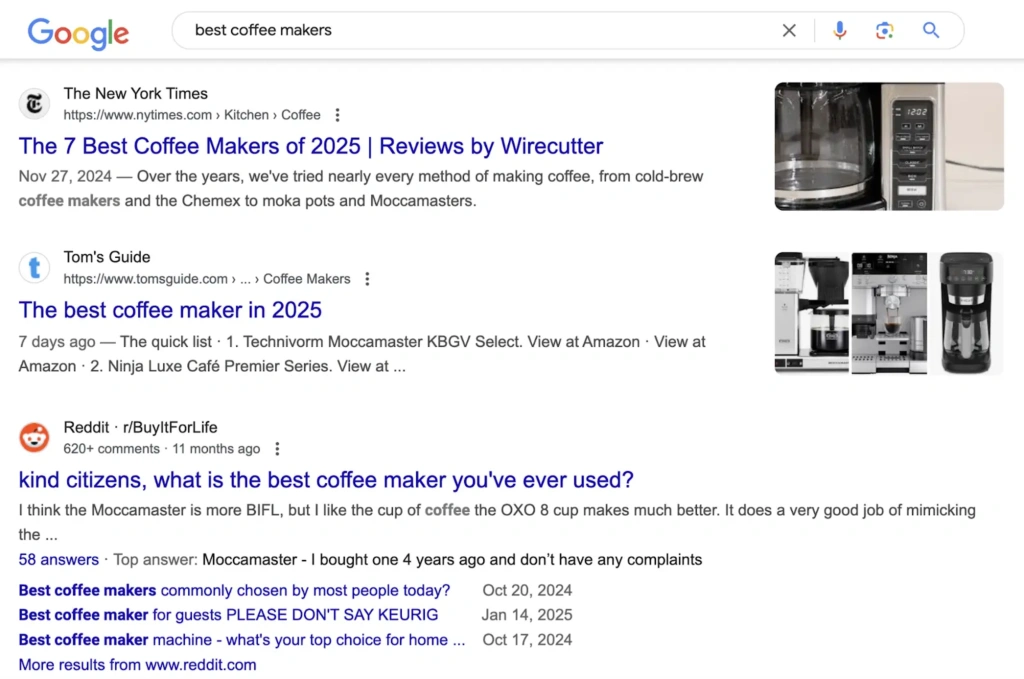
The search results page for top coffee brewers displays natural listings that match the search.
This is crucial since elevated positions typically attract more interactions and traffic.
Why Is SEO Crucial?
SEO for beginners is vital because it delivers ongoing, targeted visitors to your site at no extra cost each month.
Think about how most digital journeys begin with a search query.
When individuals seek products, services, or details, they turn to search engines. Ranking for these terms draws in users who are genuinely interested in your offerings.
Moreover, organic results often earn greater trust than paid promotions.
People recognize that ads are sponsored, but securing a prime organic spot signals that the engine views your material as valuable and authoritative, fostering trust with prospects.
The highlight?
Achieving strong rankings means steady traffic without ongoing ad spend.
Unlike social channels where content fades quickly or ads that consume budgets per click.
How to Ensure Google Indexes Your Website?
The initial step in SEO for beginners is confirming Google can discover (crawl) and catalog (index) your pages.
Google deploys bots (spiders) to locate and analyze content, adding suitable pages to its database.
Here’s a basic overview of the process (noting potential hurdles):
You post material, crawlers scan your site, indexing occurs, and if criteria are met, your page appears in results.
To aid this, leverage Google Search Console, a complimentary resource that reveals Google’s view of your site and flags critical problems impacting visibility.
Register for GSC to get started.
Post-setup, generate an XML sitemap to direct bots.
This acts as your site’s roadmap, listing key pages in a format engines comprehend.
A sample sitemap might include:
Sitemap overview lists URLs for various sections like news, events, articles, and more.
Many CMS platforms (e.g., WordPress, Shopify) auto-generate sitemaps. Alternatively, use generators like Free Sitemap Creator.
Submit it via Search Console’s “Sitemaps” section by inputting the URL.
Look for a “Success” confirmation.
Then, navigate to “Indexing” > “Pages” to spot unindexed URLs.
Charts display indexed versus non-indexed pages.

Some non-indexed pages are expected, but troubleshoot vital ones you want ranked.
Additional resource: Steps to Get Your Site Indexed by Google
SEO Fundamentals: Beginner-Level Search Engine Optimization
Keyword Discovery
Keyword discovery in SEO for beginners entails finding phrases your audience employs when hunting for subjects tied to your brand, goods, or offerings.

Essentially, it reveals real user searches, enabling content that addresses needs and pulls in traffic.
A bakery owner, for example, might target “best bakery near me” but discover via research that users also query “gluten-free pastries delivery” or “cozy cafe with wifi.”
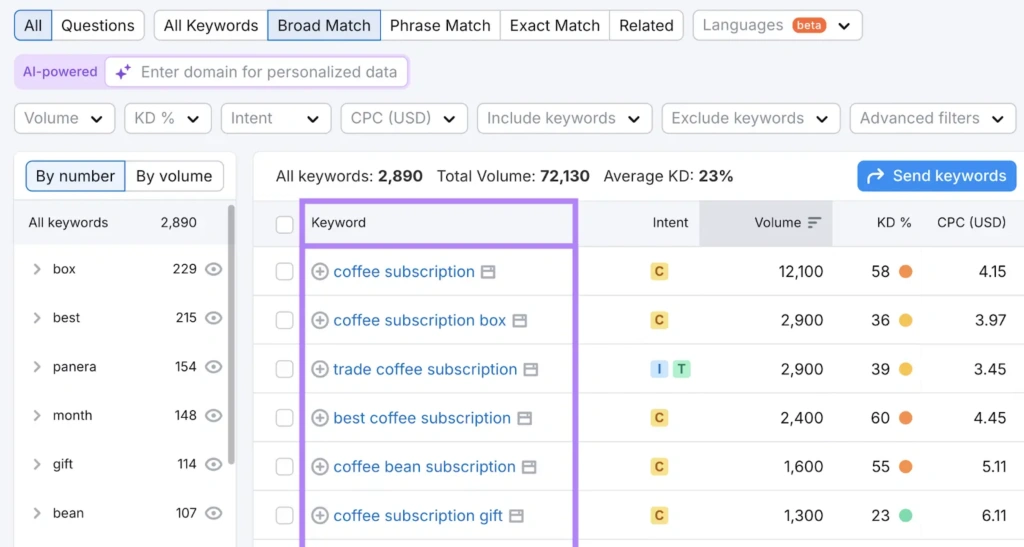
Solid keyword work uncovers audience interests and intent (search purpose), aiding targeted content.
Uncover terms with a tool like Keyword Explorer.
Input a general niche term, select a region, and hit “Explore.”
It lists broad matches including your seed and variants.
Focus initially on relevance when selecting terms for pages.
A site shouldn’t chase “artisan bread” if it doesn’t offer it.
Next, evaluate:
- Search Volume: Average monthly queries
- Difficulty Score: Ranking challenge estimate
These appear in tool outputs.
Ranking for niche, low-volume terms can yield quality traffic.
Begin modestly, scaling to tougher terms as your SEO grows.
Additional resources:
Superior Content
Now, explore crafting content that delights engines and audiences alike in SEO for beginners.

Grasp User Expectations
Figuring out what searchers seek involves decoding intent—the motivation behind queries.
This knowledge helps produce satisfying material likely to rank.
Google’s guidelines categorize intent as:
- Learn: Seeking knowledge
- Act: Wanting to perform tasks
- Site: Hunting specific pages
- Local: Finding nearby spots
SEO pros often classify as:
- Info: Education-focused
- Comparison: Pre-purchase research
- Navigation: Specific site hunts
- Purchase: Ready-to-buy actions
Analyze top results (SERP review) to gauge intent.
For “diy espresso recipe,” results feature tutorials and lists.
Matching formats boosts ranking odds.
Tools like Keyword Insights show intent via dedicated sections.
In bulk research tools, check the “Intent” field.
Produce Top-Tier Content
Top-tier content is reliable, beneficial, credible, pertinent, and accessible—qualities engines prioritize.
Hallmarks include:
- In-depth topic exploration
- Logical flow and layout
- Fresh data
- Specialist views or unique studies
- Captivating graphics
- Flawless prose
- Device-responsive design
Employ a Content Optimizer tool for guidance.
Input keywords; it suggests enhancements for clarity, uniqueness, style, and optimization.
Content scores 6.2/10, with tips for better flow and keywords.
Additional resources:
Refine Above-the-Fold Elements
Above-the-fold content is the initial viewable area, shaping first impressions.
Poor setups may prompt quick exits, harming metrics.
Effective ones:
- Weave in primary keywords organically
- Deliver immediate value
- Employ straightforward wording
- Skip disruptive features
Sample strong intro:
Header includes menu, path, headline, byline, outline, and opening text.
Visitor Interaction
Visitor interaction (UX) covers how users navigate and view your site—engines favor seamless experiences.
Core tips for great UX in SEO for beginners:
Craft Compelling Calls to Action
CTAs urge specific steps, such as newsletter sign-ups, bookings, or buys.
Tailor them to be precise and benefit-oriented:
- Weak: “Learn more”
- Strong: “Download Your Free SEO Guide”
Example CTA: “Begin optimizing today with HelpMeInSEO. Access full features for 7 days free. No commitment.” Button: “Try It Free.”
Position primary CTAs early on key pages; experiment for optimal results.
Dodge Text Blocks
Scanners prefer digestible formats over dense prose.
Segment content by:
- Shortening sentences/sections
- Adding spacing
- Inserting visuals every 250-350 words
- Using informative subheads
Example: Brief segments, images, and titles enhance readability.
Incorporate Lists, Numbers, and Concise Sections
Enhance flow with bullets, steps, and brevity for better engagement.
Tips:
- Convert dense text to points
- Lead with verbs
- Maintain uniform list styles
- Number processes
- Blend formats for variety
Blog excerpt uses numbered steps with sub-bullets.
Page-Level Optimization
Page-level optimization refines content, code, and layout for superior experiences and rankings in SEO for beginners.
Key areas:
Page Titles
Page titles are code snippets appearing as result headlines.
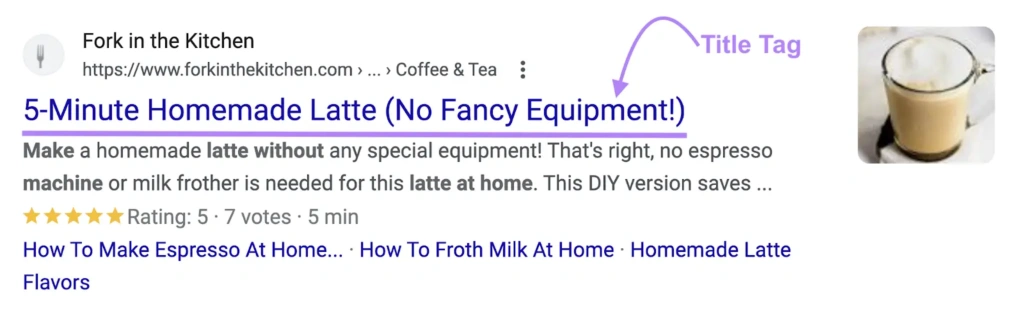
Title: “Quick Home Espresso (No Tools Needed!).”
They inform engines of topics and entice clicks.
Best practices:
- 50-60 chars max
- Feature main keyword
- Summarize accurately
- Unique per page
Summary Snippets
Summaries are brief overviews potentially shown under titles.
Snippet: “Brew espresso at home sans gear! No machine or frother required for this simple method.”
They boost clicks, though not direct rank factors.
Guidelines:
- Under 110 chars
- Integrate keyword smoothly
- Emphasize benefits
- Add action prompts
- Custom per page
Section Headers
Headers organize via H1-H6 tags, aiding engine comprehension.
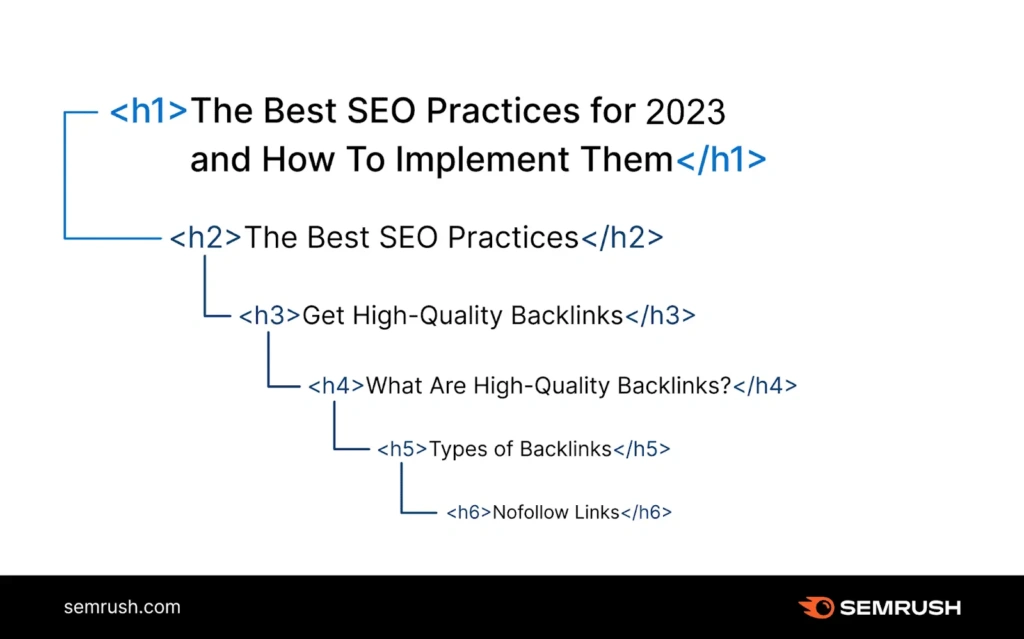
Nest logically:
Page shows tiered headers.
Tips:
- Single H1/page
- Keyword in H1
- H2 for mains, H3+ for subs
- Descriptive phrasing
Web Addresses
Addresses clarify page topics for engines and users.
URL: “helpmeinseo.com/guides/what-is-url-structure/”
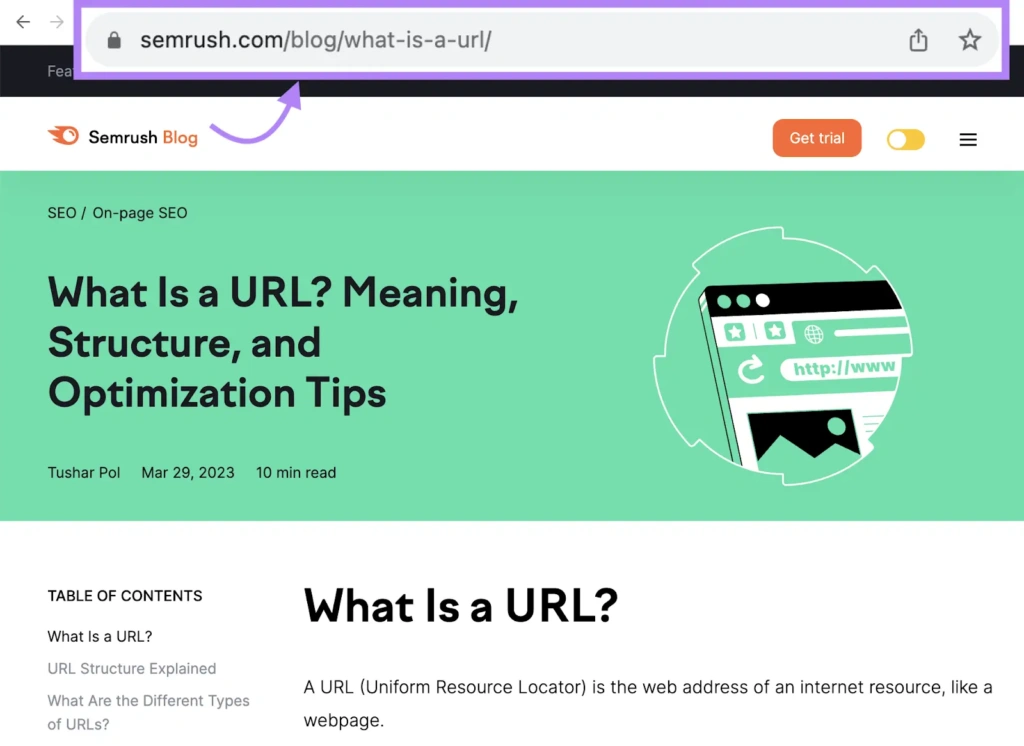
Prefer descriptive: “/blue-sneakers/” over “/item/123456/”
Optimization:
- Brief yet informative
- Include keyword
- Hyphen separators
- Omit fillers
- No symbols
Visual Assets
Visuals boost appeal and draw image traffic.
Optimize by:
- Naming descriptively (trail-running-shoes.jpg)
- Adding alt descriptions (keyword-inclusive)
- Compressing via tools like Image Compressor
- Selecting formats (WebP ideal, JPG photos, PNG graphics)
Additional: Optimizing Images for Engines and Visitors
Site-Internal Connections
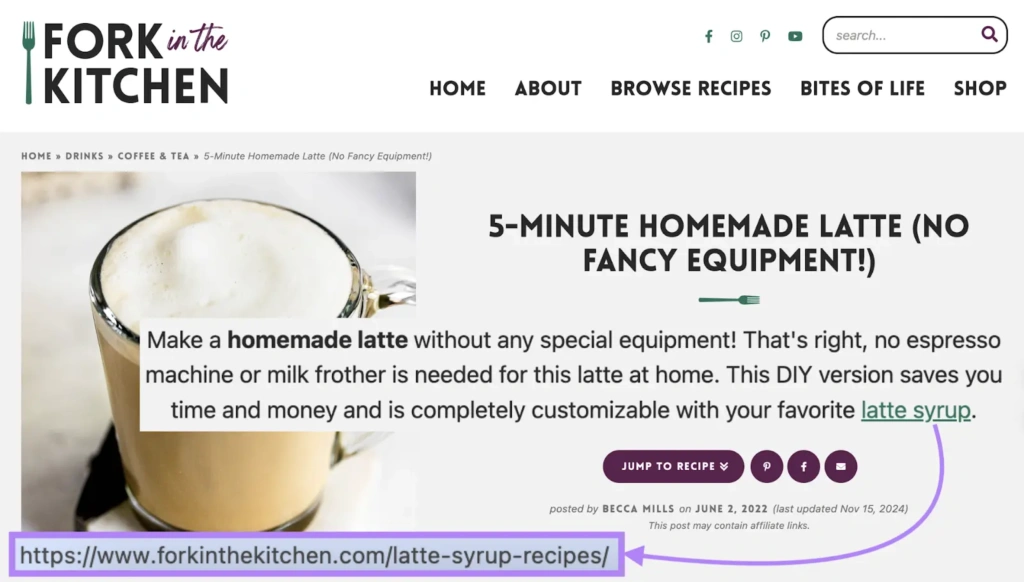
Internal connections link pages within your domain, clarifying structure, distributing value, and guiding users.
Live example: Highlighted text links internally.
Strategies:
- Descriptive link text
- Connect new pages relevantly
- Repair broken ones periodically
Boost weaker pages by linking from strong ones.
Use audit tools to identify authoritative pages for linking.
Acquiring Links
External links (backlinks) signal trust, potentially elevating authority and positions.
Secure quality ones from trusted sources.
Tactics:
Leverage Networks, Vendors, and Partners
Tap existing ties for links.
Compile:
- Suppliers
- Industry groups
- Collaborators
- Local chambers
Request inclusions on their directories; relationships ease approvals.
List in Reputable Directories
For locals or niches, directories provide visibility and possible value.
Prioritize sector-specific ones.
Note: Many use no-follow tags, reducing impact.
Tools auto-submit to major ones.
Report lists directories, statuses, and fixes.
Gain Media Mentions
Press coverage yields strong links.
Approaches:
- Engage journalists online
- Release data-driven reports
- Prepare expert profiles
- Comment on trends
- Issue newsworthy announcements
- Partner with locals
Prioritize value over direct asks for organic links.
Develop Link-Worthy Material
Attract links with originals like studies, visuals, news, or in-depth resources.
These offer novelty or clarity, encouraging shares.
Backend Optimization
Backend work ensures engines access, interpret, and catalog content efficiently for SEO beginners.
Essentials:
Guide Bots with Robots File
This file directs which areas to scan, focusing on priorities.
Crawl blogs, skip admins.
CMS often includes one at domain/robots.txt.
Sample:
Bots listed with permissions and delays.
Create if absent; test to avoid blocks.
Enhance Vital Metrics
Vital metrics gauge usability.
Include:
- Main Load Time (LCP): Largest element render
- Response Speed (INP): Interaction handling
- Stability (CLS): Shift prevention
Better scores improve experiences and potential ranks.
Check via Console’s Vitals section for issues.
Tool suggests fixes like script reduction, image sizing.
Audit reports detail metrics and tips.
Additional: Boosting Page Speed Scores
Implement Secure Protocol
Secure protocol encrypts data, a confirmed rank element.
Switch by:
- Acquiring SSL (often free via hosts)
- Redirecting old to new
- Updating references
- Refreshing Console properties
Device Optimization
With mobile priority, non-optimized sites suffer.
Tips for SEO beginners:
- Fast loads
- Adaptive designs
- Shortened titles/summaries
- Brevity and space
- No aggressive overlays
- Readable elements
Tracking SEO Progress
Monitor indicators to assess and refine strategies for SEO beginners.
Key ones:
Natural Traffic
Natural traffic counts unpaid engine visits.
Use Analytics: Acquisition > Traffic.

Filter organic for monthly totals.
Benchmark against rivals via competitive tools.
Table compares visits, uniques, durations, bounces.
Additional:
Position Tracking
Positions show SERP spots for terms.
Vital for traffic potential.
Console’s Performance lists up to 1K terms.
Tool tracks daily for selected terms.
Shows positions, changes.
Additional: Improving Rank Factors and Tips
Interaction Duration
Duration averages focused time on pages.
Gauges intent match.
Analytics defines engaged sessions as 10+ secs, conversions, or multi-views.
Check Pages for averages.
Low ones signal needed updates.
Additional: Boosting Engagement in Analytics
Goal Achievements
Achievements are completed goals like sign-ups or sales.
Show business impact.
Set as events in Analytics.
Acquisition shows organic contributions.
Additional:
Launch Your SEO Adventure
SEO for beginners starts here with the essentials and a roadmap for improved visibility.
Begin modestly—tweak a key page or resolve a tech glitch. Momentum builds.
Tools accelerate progress.
Join HelpMeInSEO for free access to comprehensive resources that enable:
- Term exploration
- Rival analysis
- Content refinement
- Position monitoring
- Site checks
And beyond.




Leave a Comment