



Alternative search engines provide diverse options for users seeking better privacy, unique features, or specialized results outside the mainstream. If you are tired of the same old search experience and want to discover platforms that prioritize user data protection, integrate AI seamlessly, or cater to specific regions, this guide is for you. As an SEO expert at Help Me In SEO, I understand how crucial it is to diversify your online presence across various search platforms to reach wider audiences. Whether you are a business owner optimizing your website or an individual looking for more tailored searches, understanding these alternatives can enhance your digital strategy.
Why Consider Alternative Search Engines?
Before we delve into the specifics, let’s discuss the importance of alternative search engines in today’s digital landscape. Google dominates the market, but relying solely on it can limit your exposure. Alternative search engines often emphasize privacy, which appeals to users concerned about data tracking. They may also offer innovative tools like AI-driven responses or region-specific content, helping businesses target niche markets. From an SEO perspective, optimizing for these platforms can boost visibility in untapped areas. For instance, if your audience includes privacy-conscious users or those in regions where Google is less prevalent, incorporating strategies for these engines can drive more traffic to your site.
Many users switch to alternative search engines due to concerns over personalization bubbles, where results are filtered based on past behavior, potentially limiting diverse viewpoints. Others seek ad-free experiences or integrated ecosystems that combine search with email, news, and more. By exploring these options, you can find tools that align better with your values or requirements. At Help Me In SEO, we recommend auditing your site’s performance across multiple engines to identify optimization opportunities, such as adjusting keywords for privacy-focused queries or enhancing mobile compatibility for AI-integrated searches.
1. Bing: AI-Enhanced Search for Conversational Queries
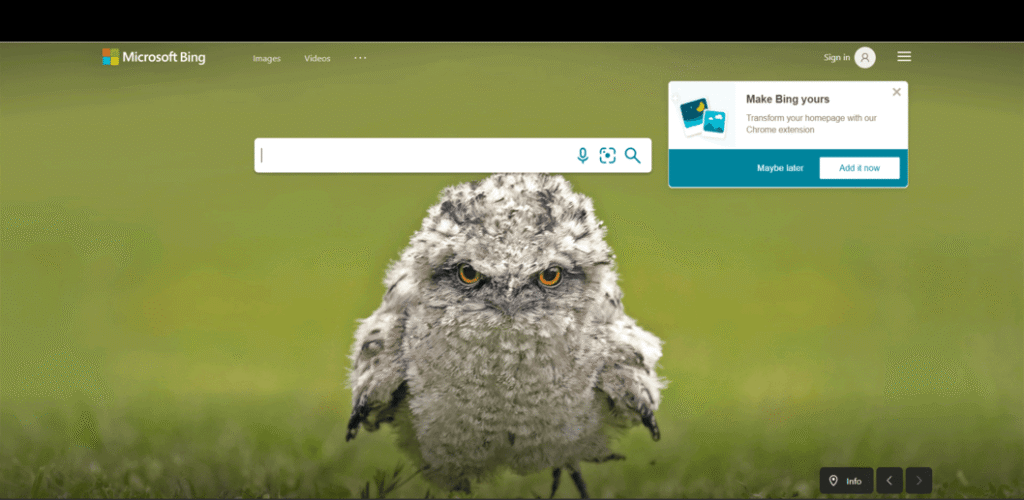
Bing stands out among alternative search engines for its seamless integration of AI, providing a experience similar to the market leader but with added enhancements. Powered by advanced AI models, Bing offers conversational responses that make searching feel more interactive. One of its key features is the built-in AI assistant, which appears alongside standard results, offering summarized answers with referenced sources. This allows users to dive deeper without multiple clicks.
For example, when querying complex topics like financial advice or travel recommendations, the AI assistant generates follow-up suggestions that anticipate your next questions. This saves time and creates a more engaging interaction. Additionally, Bing includes a rewards system where users earn points for searches, redeemable for various perks. This incentive encourages regular use, making it appealing for everyday browsing.
From an SEO standpoint, Bing’s algorithm values high-quality content similarly to others, but it places emphasis on visual elements and structured data. Websites optimized with schema markup often perform better here. If your business targets audiences in regions where Bing has a stronger presence, such as certain parts of Europe or the United States, incorporating Bing-specific SEO tactics like focusing on image alt texts and video content can yield significant traffic gains. In my experience helping clients at Help Me In SEO, shifting some optimization efforts to Bing has increased organic reach by up to 20% for multimedia-rich sites.
Bing also excels in image and video searches, pulling from a vast index that rivals the best. Users can access dedicated tabs for news, maps, and shopping, creating a comprehensive hub. Privacy-wise, while it collects some data, options to customize tracking settings provide more control than some competitors. Overall, if you value AI-driven efficiency, Bing is a top contender among alternative search engines.
2. DuckDuckGo: Privacy-First Searching Without Tracking
DuckDuckGo has gained popularity as one of the leading alternative search engines focused on user privacy. Unlike many platforms that build profiles based on your history, DuckDuckGo does not track searches or store personal data. This means results are not personalized, offering a neutral view of the web that avoids echo chambers. Users can manually adjust location settings to refine results without compromising anonymity.
The engine sources information from its own crawler and partnerships with reliable providers, ensuring accurate and diverse outcomes. A standout feature is “bangs,” which are shortcuts allowing direct searches on other sites. For instance, typing “!w” followed by a term searches Wikipedia instantly. This streamlines workflows for researchers or shoppers.
In recent developments, DuckDuckGo introduced an AI chatbot that maintains privacy standards, accessing multiple models without requiring logins. Chats are stored locally, enhancing security. For businesses, this privacy emphasis means optimizing for DuckDuckGo involves creating content that ranks well on merit, without relying on user data signals. At Help Me In SEO, we advise clients to focus on evergreen topics and strong backlinks, as these engines reward authoritative, non-manipulative content.
DuckDuckGo’s interface is clean and ad-minimal, appealing to those frustrated with cluttered pages. It supports features like instant answers for quick facts, drawn from trusted sources. If privacy is your priority, this engine delivers reliable results without the baggage of surveillance, making it ideal for sensitive queries in fields like health or finance.
3. Yahoo: A Content-Rich Portal with Integrated Search
Yahoo serves as a multifaceted alternative among search engines, blending search functionality with a dynamic homepage that acts like a personalized news feed. Upon visiting, users encounter curated sections on news, finance, sports, and lifestyle, making it more than just a query tool it’s a daily starting point.
Powered by robust backend technology, Yahoo delivers solid results for general inquiries, often including AI summaries for quick insights. Dedicated verticals like finance tracking and email integration add value, allowing seamless transitions between tasks. For SEO professionals, Yahoo’s emphasis on content hubs means optimizing articles with engaging headlines and multimedia can improve visibility in its feeds.
One advantage is the persistent search bar across pages, enabling quick lookups without navigation disruptions. This is particularly useful for users consuming news who need to verify details on the fly. While ads are present, the overall layout is user-friendly, with easy scanning of results. Businesses targeting broad audiences can benefit from Yahoo’s ecosystem by creating content that aligns with its categories, such as wellness guides or market analyses.
At Help Me In SEO, we’ve seen clients gain traction on Yahoo by incorporating rich snippets and focusing on topical authority. If you seek a blend of search and entertainment, Yahoo offers a refreshing alternative.
4. Wayback Machine: Archival Access for Historical Web Content
The Wayback Machine distinguishes itself among alternative search engines by focusing on web preservation rather than real-time results. It archives snapshots of websites, allowing users to view past versions of pages that may no longer exist or have changed significantly.
To use it, simply input a URL, and select from calendar-based archives. This tool is invaluable for researchers, historians, or marketers analyzing brand evolution. For example, comparing a site’s design over time can reveal trends in user experience. Privacy is inherent, with no tracking or ads interrupting the experience.
In SEO terms, the Wayback Machine helps in competitive analysis by uncovering old content strategies of rivals. At Help Me In SEO, we use it to recover lost pages or verify historical data for audits. While not a daily search tool, it’s essential for in-depth investigations, providing ad-free, unbiased access to the web’s history.
5. ChatGPT Search: AI-Driven Summaries with Web Integration

ChatGPT Search emerges as an innovative player in alternative search engines, combining conversational AI with live web data. It automatically fetches real-time information when relevant, presenting summarized responses with source links for verification.
Users can initiate web searches directly within chats, receiving tailored answers that often include tables or lists for clarity. This format reduces the need for tab-hopping, ideal for complex questions. From an SEO viewpoint, content that appears in these summaries must be well-structured and authoritative, as AI prioritizes quality sources.
One strength is its ability to surface lesser-known resources, like forum discussions, expanding beyond top-ranked pages. Businesses can optimize by creating detailed, answer-focused content. At Help Me In SEO, we guide clients on AI-friendly SEO, emphasizing natural language and comprehensive coverage to rank in such systems.
6. Yandex: Region-Specific Excellence for Multilingual Users
Yandex ranks highly among alternative search engines for its adaptation to Cyrillic languages and local contexts. It offers an ecosystem including maps, translation, and ride services, all accessible via one account.
Filtering options for location, language, and dates enhance precision. For SEO, Yandex favors content in native languages with local relevance. If your market includes Eastern Europe, optimizing for Yandex can capture significant traffic. Features like document language selection aid learners or international researchers.
At Help Me In SEO, we recommend multilingual strategies to leverage Yandex’s strengths, ensuring sites load quickly and use appropriate keywords.
7. Brave Search: Independent Indexing with Privacy Focus
Brave Search is a privacy-centric alternative search engine with its own index, free from reliance on major providers. Part of a broader ecosystem, it includes ad-blocking and AI tools.
Customizable “Goggles” allow result reranking, such as prioritizing forums. This empowers users to tailor searches. For SEO, Brave rewards original, non-commercial content. Premium options remove ads entirely.
8. Startpage: Anonymous Google-Like Results
Startpage provides familiar results from a major engine but strips away tracking. It includes anonymous viewing modes to visit sites incognito.
Supporting multiple languages, it’s global-friendly. SEO-wise, it mirrors standard algorithms, so core optimizations apply. The privacy shield prevents retargeting, beneficial for research.
9. Perplexity: AI Answers with Real-Time Sourcing
Perplexity functions as an answer engine among alternative search engines, delivering concise summaries backed by sources. Features like discovery tabs and collaborative spaces enhance research.
It’s excellent for stats and in-depth queries. SEO strategies here involve creating source-worthy content. Pro plans unlock advanced models..
10. AOL: Media Hub with Built-In Search
AOL combines news aggregation with search, offering a content-packed homepage. It’s ideal for integrated browsing.
SEO benefits from its curated feeds; optimize for news-style articles.
11. Baidu: Dominant in Mandarin Markets
Baidu excels in Chinese contexts, with forums and AI summaries. Censorship noted, but useful for local insights.
SEO for Baidu requires Mandarin focus and cultural alignment.
12. Naver: Curated Verticals for Korean Users
Naver offers themed results in South Korea, with communities and tools.
Optimize for verticals like blogs for better reach.
Comparison Table of Alternative Search Engines
To help you choose, here’s a table comparing key features:
| Search Engine | Privacy Focus | AI Integration | Unique Feature | Best For |
|---|---|---|---|---|
| Bing | Moderate | High | Rewards Program | Conversational Searches |
| DuckDuckGo | High | Moderate | Bangs Shortcuts | Privacy-Conscious Users |
| Yahoo | Low | Low | Content Hub | News and Lifestyle Browsing |
| Wayback Machine | High | None | Archival Snapshots | Historical Research |
| ChatGPT Search | Moderate | High | Summarized Responses | Complex Queries |
| Yandex | Moderate | Low | Language Filters | Multilingual Users |
| Brave Search | High | Moderate | Custom Goggles | Customized Results |
| Startpage | High | None | Anonymous View | Incognito Browsing |
| Perplexity | Moderate | High | Discovery Tabs | Statistical Research |
| AOL | Low | Low | Media Integration | Integrated News Search |
| Baidu | Low | Moderate | Forums in Results | Chinese Market |
| Naver | Moderate | Low | Themed Verticals | Korean Content |
Optimizing Your Site for Alternative Search Engines
Understanding alternative search engines is key, but action is crucial. At Help Me In SEO, we specialize in multi-engine optimization. Use tools to analyze traffic sources and adapt strategies. Focus on mobile-friendliness, as many alternatives prioritize it. Build backlinks from diverse domains and create content that answers user intents across platforms.
Frequently Asked Questions About Alternative Search Engines
1. What is the best alternative search engine to Google?
There is no single “best” — it depends on your needs.
- For privacy → DuckDuckGo or Brave Search
- For AI-powered answers → Perplexity or Bing
- For clean & familiar results → Startpage
- For regional strength → Yandex (Russia), Baidu (China), Naver (South Korea)
2. Are alternative search engines really more private than Google?
Yes most of them (especially DuckDuckGo, Brave Search, Startpage) do not track your searches, store your history, or build a personal profile. However, privacy levels vary always check each engine’s privacy policy.
3. Do alternative search engines give the same quality of results as Google?
Many (like Startpage, Bing, DuckDuckGo) deliver very similar or identical quality because they either use Google/Bing indexes or have strong independent indexes. Others (like Perplexity, ChatGPT Search) focus more on summarized answers than traditional link lists.
4. Can I use alternative search engines on my phone?
Yes almost all of them (Bing, DuckDuckGo, Brave, Perplexity, Startpage, etc.) have excellent mobile websites and dedicated apps in most cases.
5. Which alternative search engine has the best AI features? Currently, the strongest AI experiences come from:
- Bing (with Copilot)
- Perplexity
- ChatGPT Search These provide conversational, summarized answers with real-time web sources.


Leave a Comment