


Content Optimization is the foundation of successful digital marketing. If you want your website, blog, or online business to grow, learning how to write SEO optimized content is no longer optional it is essential. Even the best-written article will fail if search engines and readers cannot find it.
In today’s competitive online world, millions of blogs are published every day. So, how do you make sure your content stands out? The answer lies in content optimization. When your content is optimized correctly, it reaches the right audience, ranks higher on search engines, and brings consistent organic traffic to your website.
What Is Content Optimization?
Content optimization is the process of improving your content so that it performs better in search engine results and provides real value to readers. It combines content marketing and search engine optimization (SEO) to help your content rank higher on Google and other search engines.
In simple terms, content optimization means:
- Writing content people are searching for
- Using the right keywords naturally
- Structuring content properly
- Making it easy to read
- Adding technical SEO elements
Search engines like Google try to show users the most relevant, helpful, and well-structured content. If your content clearly explains a topic and follows SEO best practices, search engines will reward it with better rankings.
Why Content Optimization Is Important
Many people think publishing content is enough. But without optimization, your content may never be seen. Content optimization is important because it helps your content work harder for you.
1. Improves Search Engine Rankings
Optimized content has a better chance of appearing on the first page of Google. Higher rankings mean more visibility and more visitors.
2. Drives Organic Traffic
When people find your content through search engines, it brings free and consistent traffic without spending money on ads.
3. Builds Trust and Authority
High-ranking content makes your brand look reliable. When users repeatedly see your site in search results, they trust your expertise.
4. Increases Engagement
Optimized content is easier to read and understand. This keeps users on your site longer and reduces bounce rates.
5. Generates Leads and Sales
SEO optimized content attracts people who are already interested in your topic or product. This increases conversions and business growth.
Key Elements of SEO Optimized Content
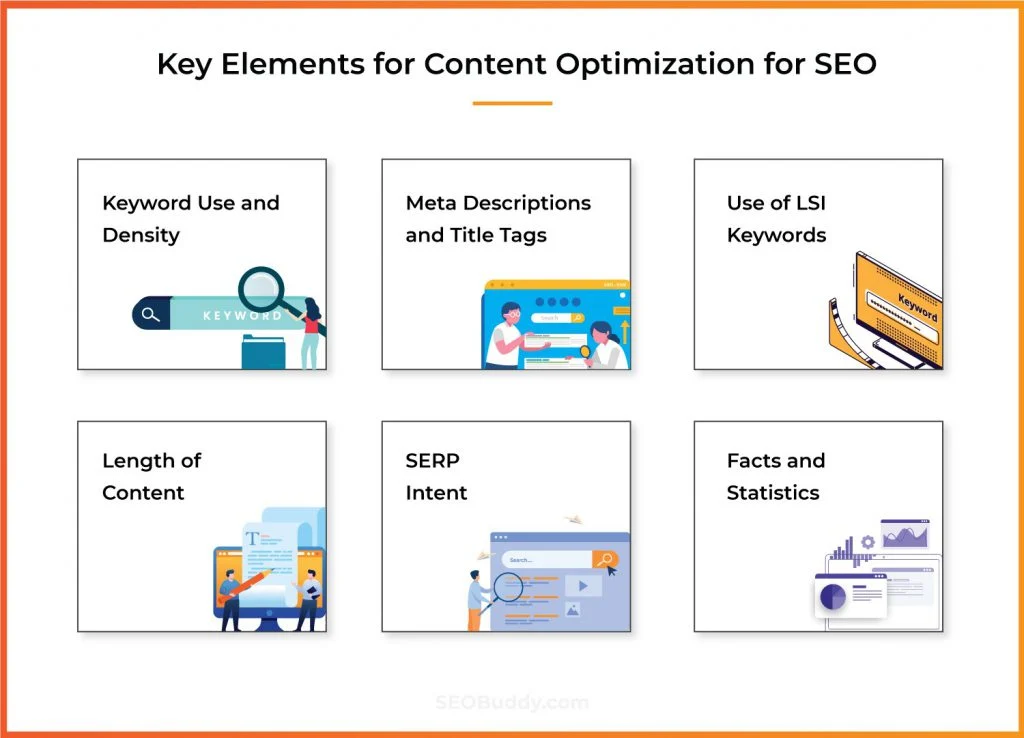
To create well-optimized content, you must understand its main components. These elements help search engines understand your content better.
1. Target Keywords
Target keywords are the words or phrases people type into search engines. Choosing the right keywords is the first step of content optimization.
For example:
- Content optimization
- SEO optimized content
- How to write SEO content
Your main keyword should:
- Appear at the beginning
- Be used naturally in headings and content
- Match user search intent
Avoid keyword stuffing. Overusing keywords can harm rankings instead of improving them.
2. Meta Title and Meta Description
Meta title and meta description tell search engines and users what your page is about.
- Meta title appears as the clickable headline in search results
- Meta description is a short summary that encourages users to click
A good meta description:
- Is under 120 characters
- Includes the focus keyword
- Sounds natural and clear
3. Headings and Subheadings (H1, H2, H3)
Headings organize your content and improve readability. They also help search engines understand content structure.
Best practices:
- One H1 per page
- Use H2 and H3 for sections
- Include keywords naturally
Clear headings make content easier to scan and understand.
4. Readability and Simple Language
Content should be written for humans first. If your audience cannot understand your content, optimization fails.
Tips for better readability:
- Use short sentences
- Avoid complex words
- Use bullet points and lists
- Keep paragraphs short
Most SEO content performs best at an 8th-grade reading level.
5. Image Optimization and Alt Text
Images improve engagement but must be optimized.
Alt text:
- Describes images for search engines
- Helps visually impaired users
- Improves image search visibility
Use simple, descriptive alt text with keywords when relevant.
6. Internal and External Links
Links help search engines understand content relationships.
- Internal links guide users to other pages on your site
- External links point to trusted sources
Good linking improves SEO and user experience.
7. Backlinks
Backlinks are links from other websites to your content. They are one of the strongest ranking factors.
High-quality backlinks:
- Increase domain authority
- Build credibility
- Improve rankings
Create valuable content to earn natural backlinks.
Fundamentals of Content Optimization
Before writing or optimizing content, remember these three fundamentals.
1. Make Content Easy for Search Engines
Search engines must clearly understand what your content is about.
How to do this:
- Use clear headings
- Add keywords naturally
- Structure content logically
Avoid confusing layouts or unrelated information.
2. Improve User Experience
If users enjoy reading your content, search engines notice.
Focus on:
- Clear language
- Visual breaks
- Logical flow
- Useful information
Better experience leads to higher engagement.
3. Provide Complete SEO Data
Behind-the-scenes SEO matters too.
This includes:
- Meta tags
- Alt text
- URL structure
- Page speed
All technical elements work together to support content optimization.
11-Step Content Optimization Checklist
Follow these steps to optimize any content effectively.

Step 1: Keyword Research
Identify keywords relevant to your topic using tools like Google Search Console or Ahrefs.
Step 2: Choose a Focus Keyword
Select one main keyword and a few related terms.
Step 3: Create an Outline
Plan headings, subtopics, and key points.
Step 4: Write Naturally
Focus on helping readers. Add keywords where they fit naturally.
Step 5: Use Proper Headings
Start with H1 and organize content using H2 and H3.
Step 6: Improve Readability
Use lists, short paragraphs, and simple words.
Step 7: Add Internal and External Links
Link related content to improve value.
Step 8: Optimize Meta Tags
Write SEO-friendly titles and descriptions.
Step 9: Add Alt Text to Images
Describe images clearly and accurately.
Step 10: Proofread Carefully
Fix grammar, spelling, and clarity issues.
Step 11: Publish and Monitor
Track performance and update content regularly.
Best Tools for Content Optimization
Using the right tools can simplify optimization.
Google Search Console
Free tool to monitor performance, track keywords, and fix issues.
Ahrefs
Powerful SEO tool for keyword research, competitor analysis, and backlinks.
Hemingway Editor
Improves readability by simplifying complex sentences.
Common Content Optimization Mistakes

Avoid these errors:
- Keyword stuffing
- Ignoring readability
- Skipping meta descriptions
- Using duplicate content
- Forgetting mobile optimization
Humai.in Content Optimizer – Rewriting Smarter with Human AI Precision
In today’s fast-paced digital world, content isn’t just about words it’s about visibility, clarity, and engagement. Humai.in Content Optimizer is built to redefine how creators, marketers, and brands elevate their online presence.
Powered by Human-AI collaboration, the Humai Content Optimizer intelligently rewrites text to make it fully SEO-optimized, ensuring every piece of content ranks higher and reads better. Whether you’re polishing a blog, crafting product descriptions, or upgrading website copy, the tool enhances readability, keyword placement, and contextual flow without losing your brand’s voice.
But Humai.in doesn’t stop at text. The platform also offers AI-driven image editing, helping users create visually compelling content that aligns with their optimized writing for maximum impact. Together, this combination of smart writing and creative visuals transforms how digital content is produced and optimized.
With Humai.in, every word and every image work in sync to tell your story beautifully, effectively, and strategically.
Conclusion
Content optimization is not a one-time task it is an ongoing process. By writing SEO optimized content using the right keywords, clear structure, and simple language, you can attract more visitors, build trust, and grow your online presence.
Focus on helping readers first, and search engines will follow.
FAQs
What is content optimization in SEO?
Content optimization is improving content structure, keywords, and readability to rank higher in search engines.
How many keywords should I use?
Use one main keyword and a few related keywords naturally throughout the content.
Is content optimization important for blogs?
Yes, without optimization, blogs may not rank or reach the right audience.
Can old content be optimized?
Yes, updating old content with new keywords and structure improves rankings.
Which tool is best for beginners?
Google Search Console is the best free tool for beginners.


Leave a Comment